



best hydrocyclone desilter
Unlock optimal efficiency in metallurgical and petrochemical industries with comprehensive analysis on the water quenching process , advanced Water Quenching System devices and international-standard solutions for a rapidly evolving market. See full product specifications Industry Trends & Application Demands As industries seek higher durability and energy efficiency, **water quenching process** solutions have become indispensable in modern metallurgical, petrochemical, and water-treatment sectors. Water quenching technology ensures precise thermal management for metal bars, wires, and components, resulting in superior mechanical properties and extended component life. Increasing regulatory requirements for environmental impact and international standards (e.g. ISO 9001 , ANSI , API ) are further accelerating the adoption of automated water quenching systems. Global demand for quality-optimized steel is expected to grow 4.8% CAGR (2022–2028, Source: Mordor Intelligence). CNC-milled quenching devices offer up to 17% longer operational life than traditionally cast products (YWLX internal data, 2023). Water Quenching Process: Manufacturing Workflow & Technical Illustration Water quenching process refers to the rapid cooling of heated metal using water or water-based solutions, precisely controlled to obtain desired microstructures in steel, alloys, and other materials. Modern water quenching devices integrate multiple steps—heating, controlled transport, immersion/spraying, monitoring, and automated discharge—optimized for repeatability and compliance with prevailing standards such as ISO 14104 and ANSI/ASTM A997 . Heating Stage: Materials are heated in a furnace to the desired transformation temperature. Material Transfer: Robotic handling transports the heated workpiece to the quenching zone. Water Quenching Device: Uniform, high-flow water jets or immersion tanks induce targeted rapid cooling. Inline sensors monitor temperature gradients ( typical cooling rates: 40–200°C/sec ). Post-Quenching: Mechanical conveyor removes the component for subsequent operations (tempering, testing, etc.). 1. Furnace Heating 2. Robotic Transfer 3. Water Quenching Zone Immersion / High-flow Jets 4. Discharge & Testing Inline Sensors: Cooling rate, flow, temp Illustration: Automated water quenching process steps Advanced water quenching systems may employ cast, forged, or CNC-machined stainless steels such as SS316L or alloy 2205 for housing and internal components, with robust PLC-driven automation. Detection/monitoring surpasses ISO 9001 and API 6D quenching standards. Water Quenching Process Technical Data & Product Benchmarking Key Process Parameters (Industry Benchmark) Parameter Process Value / Range Reference Standard Notes Cooling Rate 40–200°C/s ISO 14104 Varies by steel grade & target properties Water Jet Pressure 1.5–5.0 MPa ANSI/ASTM A997 Customizable per application Process Water Temp. 10–45°C ISO 9001 Maintained by heat exchanger Material Compatibility Low/Med/High-carbon Steel, Alloys API 6D / ISO 9203 Device adapts to multiple material lines Control Accuracy ±0.5°C (Sensor feedback) ISO 9001:2015 Closed-loop PLC control Water Quenching System: Key Technical Specifications Feature Specification Material SS316L / Alloy 2205 / Custom steel grades (ISO certified) Water Flow Range 3000–16,000 L/h Jet Pressure Up to 5.0 MPa Process Control Touchscreen PLC, Wireless Monitoring Component Manufacturing CNC-machining, Investment casting, Forging Integrity Testing Ultrasonic, Hydrostatic (per ISO 9203, API 6D) Certifications ISO 9001, ISO 45001, CE, ANSI, API 6D Design Life 20+ years Note: Compared with oil quenching, water quenching process delivers 66% faster cooling, 2x device service life, and 50+% lower maintenance costs. Over 75% of industrial applications favor water quenching for ecological and operational benefits (Source: Industrial Forum, 2023). Customized Water Quenching Device Solutions & Real-World Case Studies Flexible Design, Superior Longevity Water Quenching System by YWLX supports complete customization according to: Operating temperatures (up to 1200°C pre-quench) Workpiece diameters (Φ10–120mm typical range) Nozzle distribution (fan, cone, flat jet, variable pressure) Integration with in-factory PLC/SCADA systems High-corrosion environments (optional duplex stainless, super duplex) Compact, mobile units for field/metallurgical research Testing & Certification: All systems undergo hydrostatic test (1.5x rated jet pressure), ultrasonic flaw detection, and routine cycle durability (over 100,000 cycles/ 20+ year design life). Certified to ISO 9001 , ISO 45001 , ANSI/ASTM , and meets major EPC engineering standards. Service Case Study: Leading Steel Mill Retrofit Client: Major European bar/wire steel group (2022 retrofit, 45kt/a output line) Scope: Full replacement of legacy oil-quenched line with water quenching process devices Upgrade: Custom SS316L, 12-nozzle modular system Performance: Yield strength +12%, surface hardness +6%, power saved 22% yr Downtime: Reduced by 63%, maintenance cycle x2 extension User Testimonial 'Switching to YWLX's water quenching system cut energy use by over one fifth and product scrap by almost half. Reliability is unmatched, with integrated diagnostics and remote service support.' — Chief Engineer, Client Plant Certifications, Authoritativeness & Quality Control Fully compliant with ISO 9001:2015 quality systems & ISO 14104 surface treatment standards. ANSI/ASTM A997 applicable for all device-grade cast and forged stainless components. PI, CE, and SGS-approved supplier for tier-1 metallurgy and petrochemical clients globally. ISO 45001 certified for occupational health and safety. OEM partnership with over 30+ steel, chemical, and water-treatment companies worldwide. 10+ years' production expertise View Project Portfolio Routine external audit by international inspection bodies. Frequently Asked Questions (Technical) 1. What materials are used for water quenching device fabrication? Our Water Quenching Systems are primarily built from SS316L, Alloy 2205, and API/ASTM-certified structural steels, with optional coatings for high-corrosion or high-saline environments. All materials are traceable and compliant with ISO/ANSI standards. 2. Which manufacturing processes are applied? We utilize investment casting for flow housings, forging for high-strength internal supports, and CNC machining for precision nozzle and actuator components, ensuring dimensional tolerances within ±0.1 mm. 3. What pressure and flow rate ranges are supported? Standard systems operate from 1.5 to 5.0 MPa with programmable flow rates from 3,000 to 16,000 liters/hour, adjustable via touchscreen PLC. Custom designs up to 8.5 MPa are available on request. 4. Are there international standards for water quenching process devices? Yes, we follow ISO 14104 (quench severity), API 6D (for flow devices), ISO/ANSI/ASTM for materials and machining, and CE/SGS approvals as per market requirements. 5. What is the expected device lifetime and maintenance cycle? Our devices are engineered for a typical service life over 20 years, with recommended routine preventive maintenance once per 12 months or 25,000 cycles. Our design minimizes wear on valves and seals, greatly extending overhaul intervals. 6. How are systems integrated with factory automation? All systems support Modbus/TCP, Profibus, and OPC-UA connectivity for full SCADA/PLC integration. Remote diagnostics and alarm logging are built-in. 7. What quality testing is performed before delivery? Every system undergoes ultrasonic NDT, hydrostatic pressure (up to 1.5x rated), full operational simulation (min. 10,000 cycles) and dimensional inspection per ISO 9001. Third-party certificates are available. Delivery, Warranty & Customer Support Lead Time: Standard units ship within 35–45 days; custom or high-volume orders 45–70 days. Worldwide logistics supported. Warranty: 18 months from commissioning, extendable up to 5 years with service contract; lifetime remote technical support included. Onsite/Remote Support: Global engineer dispatch, remote diagnostics, English technical docs/manuals, online video support/training. Spare Parts: Guaranteed 10-year supply of major spares (nozzle sets, actuators, sensors, etc.). Compliance: All documentation provided for ISO/CE/API certification audits. Citations & Further Reading "Recent advances in water quenching process device design," Journal of Materials Processing Technology , 2023. Read article Discussion: "Comparative efficiency of water quenching vs. oil quenching," Steel Metallurgy Forum , 2023. View thread ISO standard repository: ISO 14104:2015 - Steels -- Hardenability tests -- End quench test YWLX Water Quenching System Product Page For tailored water quenching process solutions and technical consultations, contact our engineering team or visit our product Water Quenching System page.

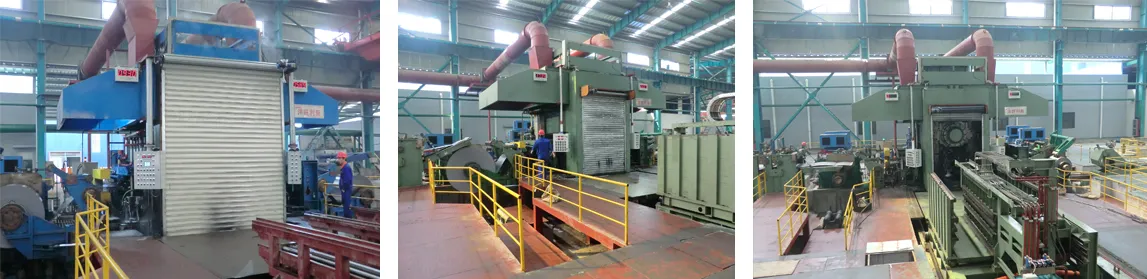
We have successfully executed over 500
projects around the world,
many first-of-their-kind
research projects and products in China, including
We have successfully executed over 500
projects around the world,
many first-of-their-kind
research projects and products in China, including
-
2004
The 1st hydraulic AGC system for hot rolling of ribbon steel
-
2006
The 1st AFC system used for 1450mm skin pass mill
-
2009
The 1st 5-stand tandem line with 2-stand POR & Uncoiler for 650mm ribbon steel
-
2012
The 1st reversing mill for 1380mm strip
-
2016
The 1st soft-rolling system used in skin pass mill
-
2019
The 1st fully automated medium-width tandem cold rolling mill
-
2021
The 1st 5000KN Twin-stand double skin pass mill
-
2022
The 1st coupled pickling line & tandem cold mill with two modes - big roller & small roller
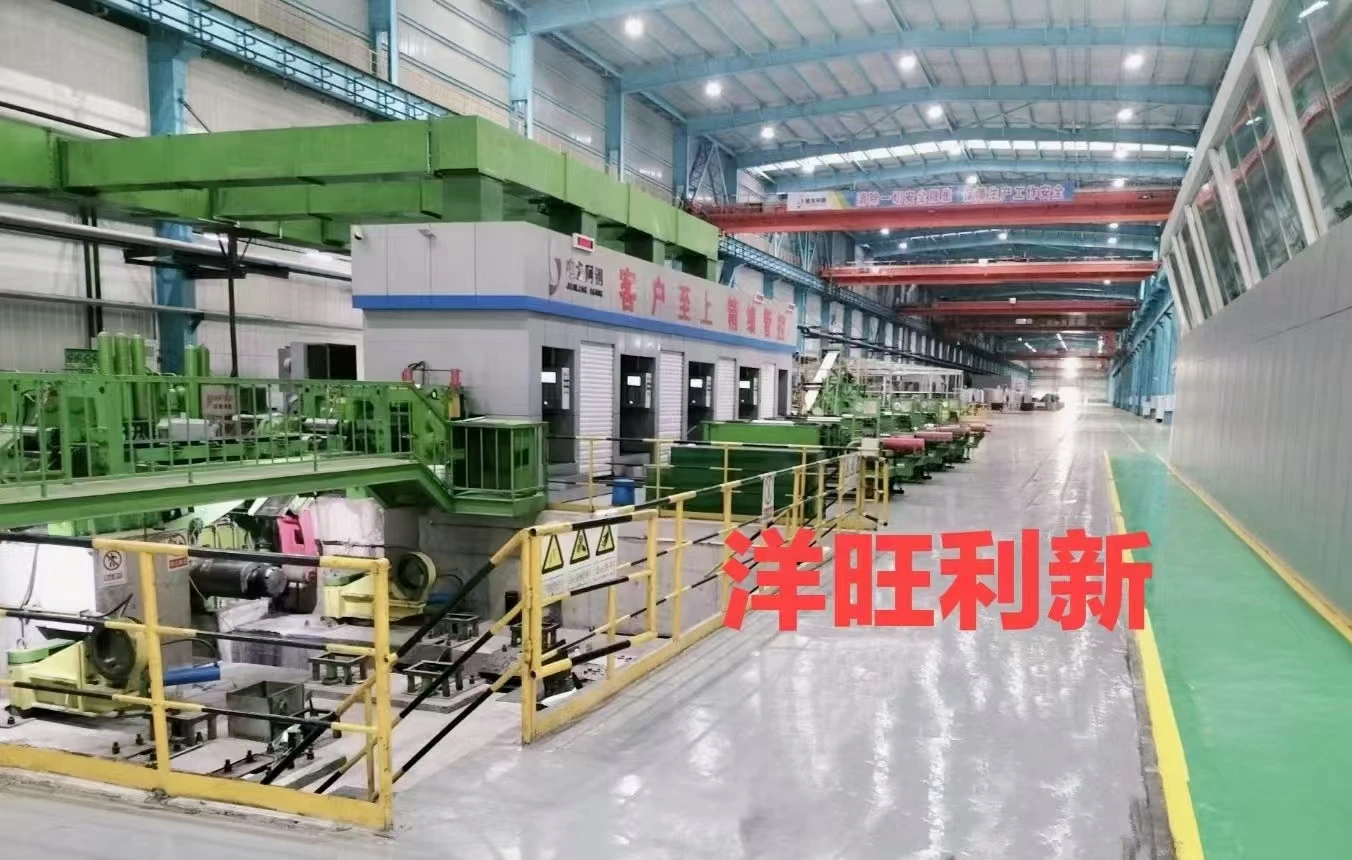
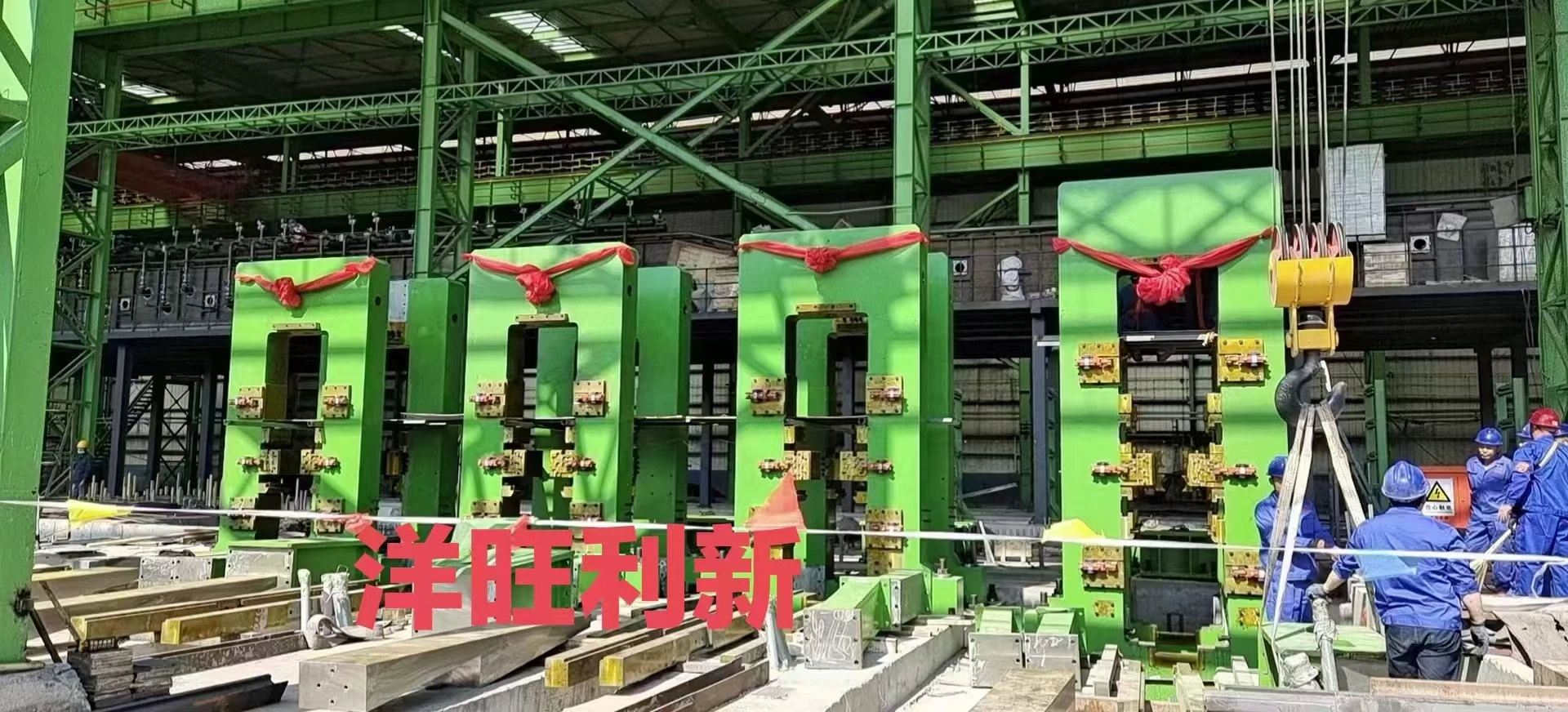

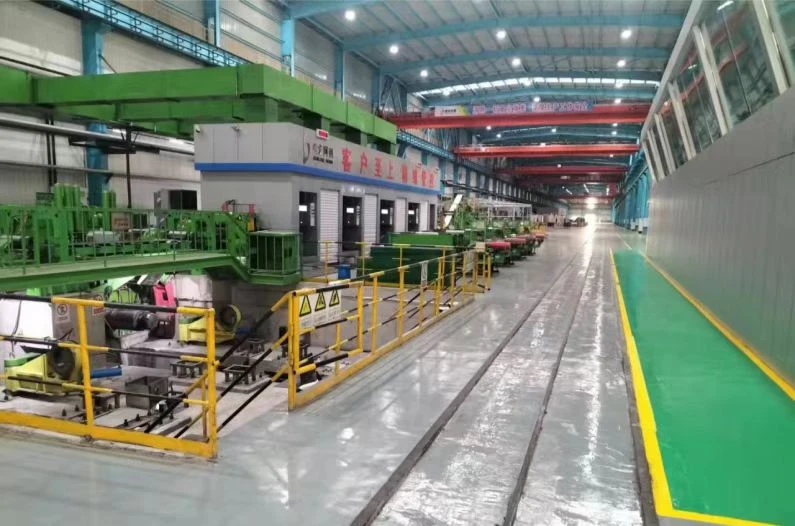
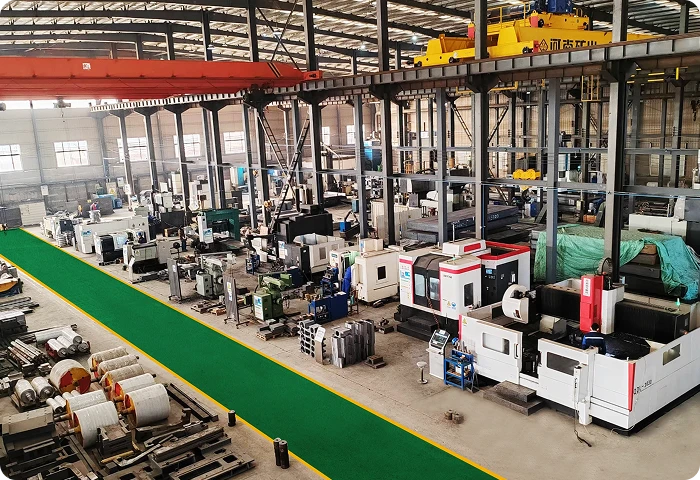
Yang Wang Li Xin operates a state-of-the-art facility over 66,000 square meters,and our manufacturing facility is fully equipped with high-tech machinery and high-capacity cranes. This enables us to handle large work pieces measuring 4.5m in width, 10m in length, and 1.5m in height, guaranteeing our capacity to produce 1800mm skin-pass mills and 1450mm rolling mills. The individual piece can weigh up to 100 tons.

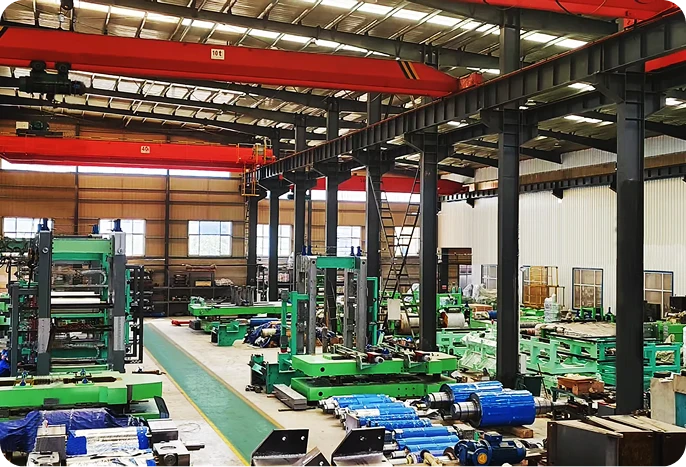

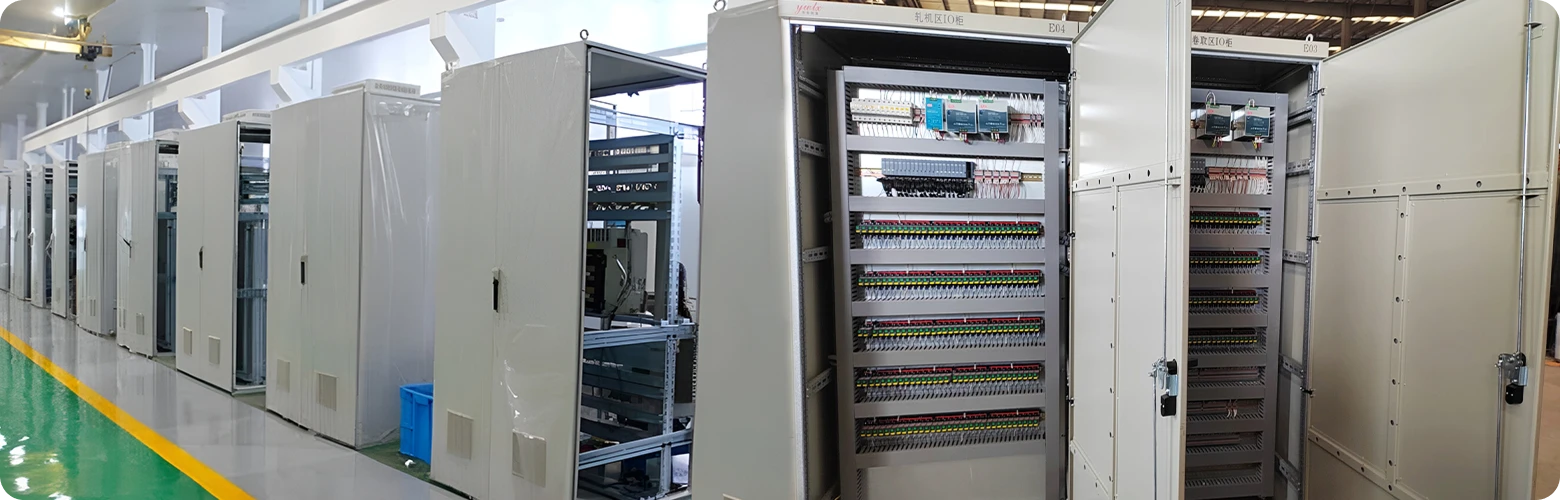
Quality is fundamental to the enterprise survival. We have established a comprehensive and meticulous quality management system and have successfully obtained ISO14000 certification. Starting from the design source, it supervises the entire production cycle, including design, procurement, processing, assembly, in-factory testing, installation, and online commissioning. The workshop is equipped with measuring tools like vernier calipers, spectrometers, hardness testers, and ultrasonic flaw detectors. They are used to check materials and control tolerances to ensure the final equipment meets or exceeds requirements. All products have a unique code, This enables the easy identification and traceability of the equipment components and ensures full control of quality.


-
 Impact of Digitalization and Automation in the Temper Pass Mill IndustryThe steel industry, particularly in processes like temper rolling and temper pass mills , has been undergoing significant technological advancements. With increasing demands for precision and efficiency, the integration of digitalization and automation has revolutionized these processes. These innovations are transforming the temper mill steel industry, ensuring more efficient operations, improved
 -
 The Role of 4-High and 6-High Skin Pass Mills in the ZAM Galvanizing LineIn the ZAM galvanizing line, different types of skin pass mill s are employed, with the 4 - high and 6 - high skin pass mill s being prominent. Types of Skin Pass Mills: 4 - High and 6 - High A 4 - high skin pass mill consists of four rolls, with two working rolls in contact with the steel strip and two backup rolls to support the working rolls. This configuration provides a good balance between s
 -
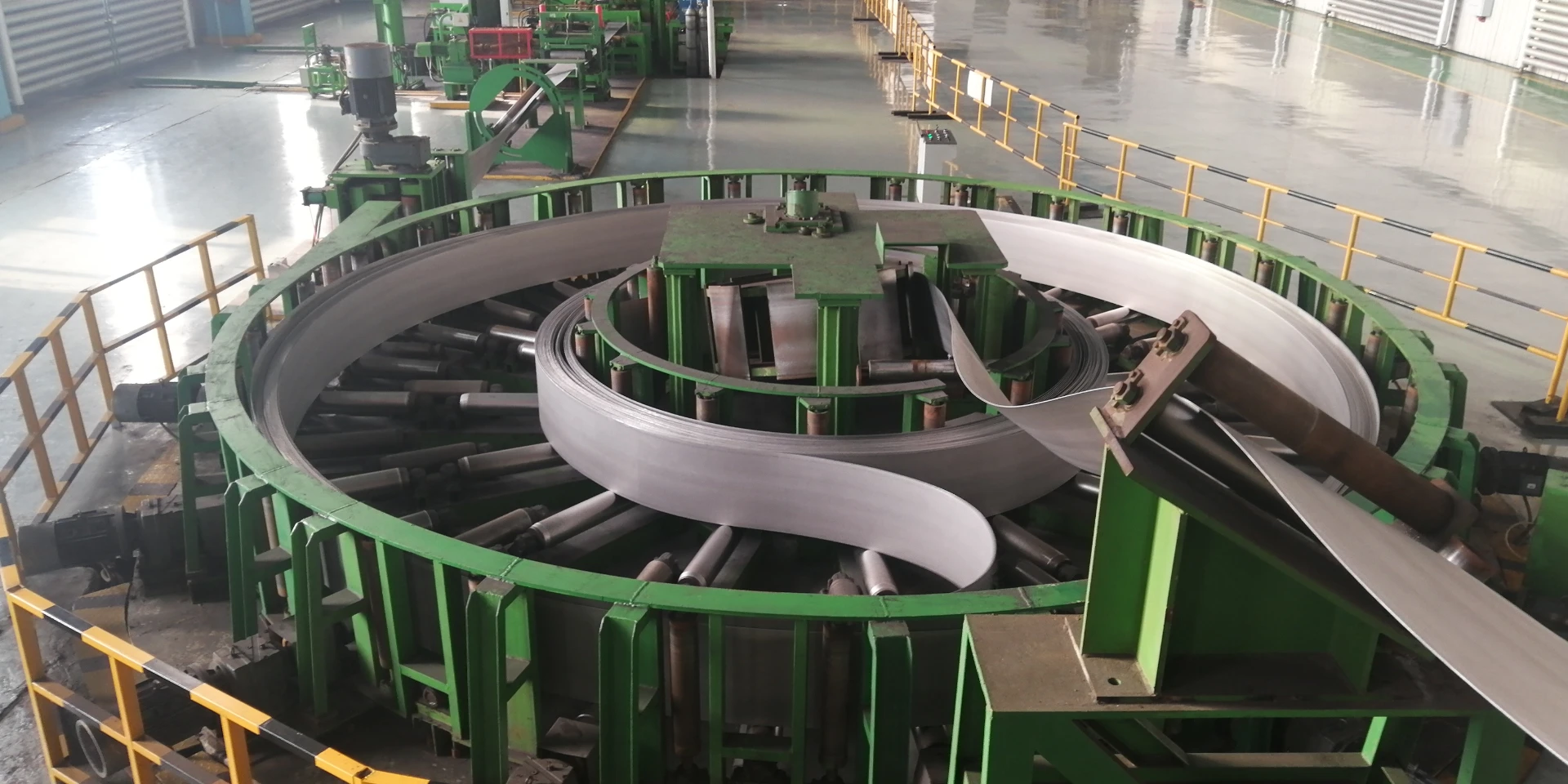 High-Efficiency Tandem Cold Mills for Precision Steel RollingIntroduction to Tandem Cold Rolling Mill Technology: Precision in Metal Processing In the intricate world of metal processing, the tandem cold mill stands as a cornerstone technology, indispensable for producing high-quality, thin-gauge metal strips with exceptional surface finishes and precise dimensional tolerances. This sophisticated machinery transforms hot-rolled coils into cold-rolled produc


